Autumn HPC School '26




Supercomputing at the Autumn HPC School! This 2-week program is perfect for students and researchers keen to explore the world of AI, quantum computing, and high-performance computing. Join us for our excellent keynotes and workshops and unlock the power of HPC.
Be part of our free event and select tracks that match your interests. Seats are limited, so make sure to register quickly to secure your spot! For the latest information, including up-to-date session locations, always check hpc-training.nl, and see quantumeindhoven.nl for the dedicated Eindhoven Quantum Computing Workshop embedded within the school.
This HPC School is made possible through the collaboration between the TU/e Supercomputing Center, SURF, & EuroCC Netherlands.
Participants will have the opportunity to engage with leading experts in the field, gaining insight into the latest advancements and methodologies in supercomputing. The program is designed to be both comprehensive and accessible, ensuring that attendees of various experience levels can benefit fully from the sessions.
In addition to the structured workshops, there will be networking opportunities where attendees can connect with peers and industry leaders. This is an excellent chance to discuss potential collaborative projects, share ideas, and build relationships within the HPC community.
Don't miss out on this incredible opportunity to advance your knowledge and skills in AI and high-performance computing. Secure your spot today and be part of a transformative experience that will enhance your research and career potential in the field of supercomputing.
For questions or feedback about the HPC school, including reservations, email us at hpc-training@tue.nl!
Speakers
Schedule
- Tue29SepHPC Primer - 1An introductory guide to HPC essentials for beginners, covering remote terminal setup, bash scripting, file management, job execution with SLURM, and an overview of TU/e's Supercomputing Center.
-
- Wed30SepHPC Primer - 2 (inc. RDM for HPC workflows)Covers SSH connections & keys, using git version control on a supercomputer, and the fundamentals of Research Data Management (RDM) applied to supercomputing.
- 10:00 - 12:00Git for HPC workflows
- 12:30 - 14:00Research Data Management (RDM) for HPC workflows
-
- Thu01OctIntro. to Supercomputing, File Systems & LUMIUnderstand what high-performance computing is, learn the basics of clusters and supercomputers, get hands-on with the national supercomputer Snellius, and learn how to choose the right file system for the job.10:00 - 17:00 TU/e Campus
- Fri02OctEindhoven Quantum Computing WorkshopA multidisciplinary workshop addressing the emerging field of Quantum Computing: what it is, what it is not, and how it relates to Supercomputing/HPC. Participants gain a broad overview and insight into Quantum Computing, plus hands-on experience with current Quantum algorithms.09:30 - 17:30 TU/e Campus
- 09:30 - 10:15Quantum 101
-
- 10:15 - 10:45Quantum @ SURF
-
- 11:00 - 11:30Quantum & CFD
-
- 11:30 - 12:15Panel Discussion: Quantum Hype?
-
- 13:15 - 16:00Hands on Quantum Computing with Quantum Inspire
-
- 16:00 - 16:30CQT Quantum Lab Tour
- 16:30 - 17:30Networking Drinks
-
- Mon05OctMassively Parallel Job Submission & HPC EfficiencyLearn how to efficiently run large numbers of independent jobs using SLURM arrays and QCG-PilotJob, followed by a session on monitoring energy and performance with the EAR dashboard.10:00 - 16:00 TU/e Campus
- 10:00 - 12:30Massively Parallel Job Submission on Supercomputers
- 13:15 - 16:00HPC Efficiency: Profiling, EAR dashboard
-
- Tue06OctLarge-Scale Data Version Control for HPC with Git and DataLadLearn how to version control research data with git and DataLad, including large binary files, collaborate through a git forge, and add machine-actionable reproducibility to your HPC workflows on Slurm.
-
- Wed07OctGPU Computing 1 & 2An introduction to parallel computing architectures and GPU programming with Python, using Numba and PyCUDA on Snellius' Nvidia A100 and H100 GPUs.09:30 - 16:00 TU/e Campus
- 11:30 - 12:15Keynote: NXP
-
-
- Thu08OctHigh-Performance Deep-LearningEnhance your deep learning efficiency by setting up a software environment, optimizing file I/O, leveraging CPU/GPU capabilities, profiling PyTorch, and utilizing parallel computing.09:30 - 16:00 TU/e Campus
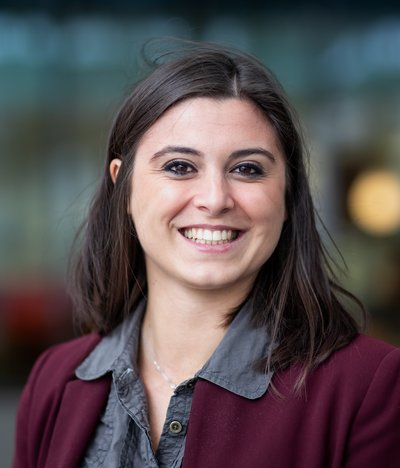
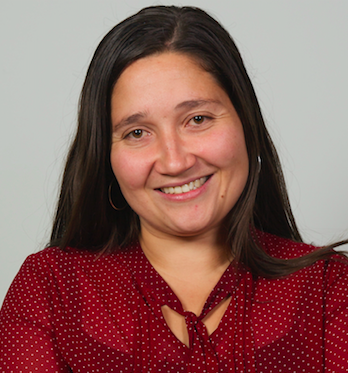
- 11:30 - 12:15Keynote: Anna Kashkanova (TU/e)
-
-
- Fri09OctVisualization with (Remote) Paraview & BlenderGet to know the fundamentals of scientific visualisation using ParaView's 3D data manipulation model and pipelines, followed by an introduction to producing attractive images and animations from 3D scientific data using Blender.09:30 - 16:30 TU/e Campus
- 09:30 - 12:30Visualization with (Remote) Paraview
- 13:30 - 16:30Scientific Visualisation with Blender: Data, Lights, Camera, Action! (introduction)
-
Supported By
SURF

SURF is a cooperative association of Dutch educational and research institutions in which the members combine their strengths. Within SURF, we work together to acquire or develop the best possible digital services, and to encourage knowledge sharing through continuous innovation. The members are the owners of SURF.
EuroCC Netherlands

EuroCC aims to build a European network of 33 national HPC competence centres to bridge the existing HPC skills gaps while promoting cooperation across Europe. The establishment of a European network of 33 national HPC competence centres (NCCs) is coordinated by the EuroCC project. This falls under The European High Performance Computing Joint Undertaking (EuroHPC JU) from the European Union.
EuroHPC JU
The European High Performance Computing Joint Undertaking (EuroHPC JU) pools European resources to develop top-of-the-range exascale supercomputers for processing big data, based on competitive European technology.
DataLad
DataLad is a free and open source distributed data management system that keeps track of your data, creates structure, ensures reproducibility, supports collaboration, and integrates with widely used data infrastructure.
Supercomputing Brabant
Supercomputing Brabant is a regional initiative connecting Brabant-based knowledge institutions, companies and researchers to supercomputing facilities and expertise.